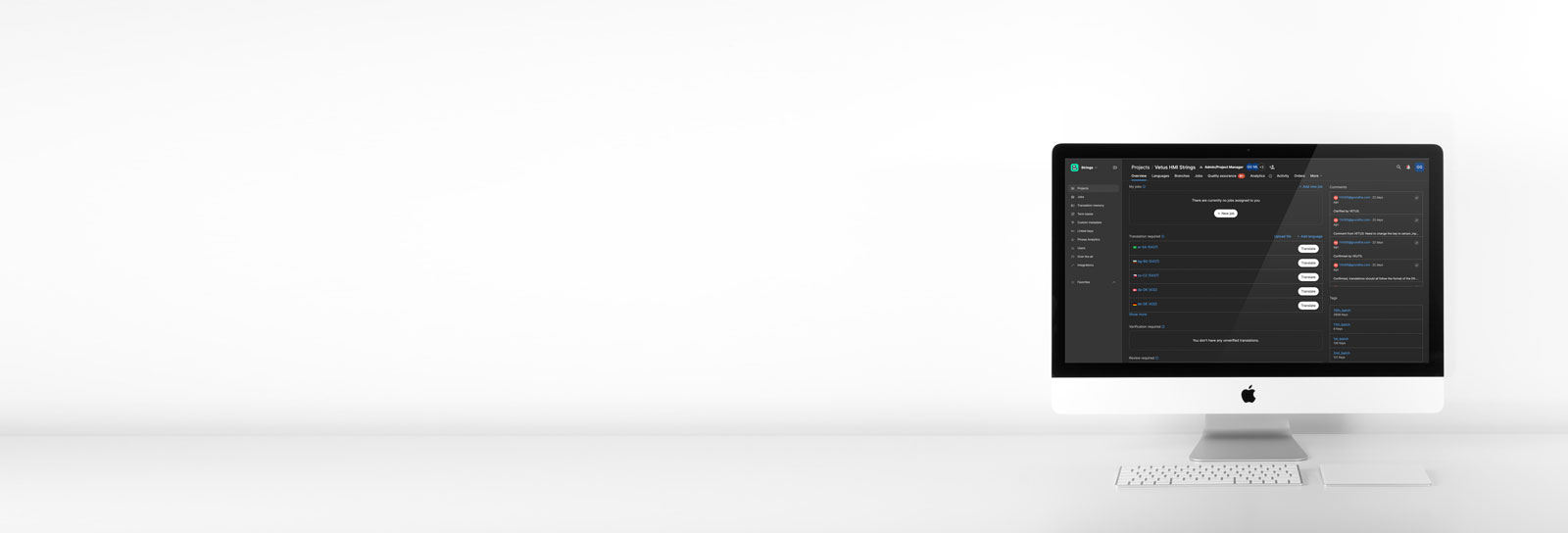
Strategic Problem
As Grundfos expanded its digital tools globally, the lack of a centralized system for phrase strings led to inconsistent terminology and critical UI breakage in languages with long character counts (e.g., German or Finnish). Managing 32 languages manually resulted in high operational overhead and a fragmented user experience for onsite operators in different regions.
Systemic Solution
I engineered a centralized strings governance model that decoupled text from the hard-coded UI, allowing for seamless localization across the global product suite. I designed a library of fluid UI components that dynamically adapt to varying string lengths, ensuring that critical technical terminology remains legible in every supported language.
Methodology
I led a comprehensive audit of high-density data views to identify the most vulnerable touchpoints for text overflow. I utilized Pseudolocalization testing to stress-test the interface against extreme string expansions and contractions, validating the resilience of the global design system before deployment.
Design Strategy
I implemented a semantic string library where technical terms (e.g., "Booster Pressure," "HVAC Fault") are standardized across the entire ecosystem. By utilizing a content-first design approach, I ensured that labels, tooltips, and alerts maintain a clear hierarchy and visual balance, regardless of the language selected by the operator.
Design Ops
I integrated the string management system into the broader Grundfos Design System, establishing a repeatable process for adding new languages or updating existing terminology. This infrastructure significantly reduced the time-to-market for localized software updates and minimized the need for manual UI adjustments during the translation phase.
Stakeholder Management
I facilitated technical alignment between the Global Product Marketing teams and the Software Engineering departments to define the source of truth for industrial terminology. I acted as the bridge between translators and developers, ensuring that the contextual meaning of complex engineering terms was preserved across all 32 markets.
Reflection
Managing 32 languages taught me that design is secondary to content resilience in global products. I learned that a Lead Designer's role in globalization is to build container logic that survives the unpredictability of human language, ensuring the system remains functional even in the most extreme translation scenarios.